
Sri Lanka’s restrictive approach to safer nicotine alternatives is blocking escape routes for tobacco users and squandering the chance to save 85,000 lives, according to a major new report by international health experts published today.
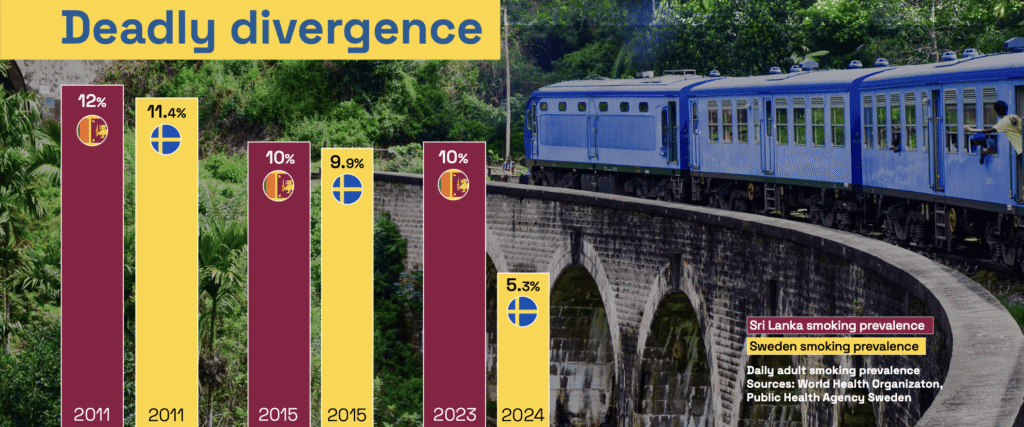
The landmark study by Smoke Free Sweden, titled Tale of Two Nations: Sri Lanka v Sweden, highlights how Sweden has reduced smoking prevalence to just 5.3% – the lowest in the EU – through widespread access to safer nicotine products such as snus, nicotine pouches and vapes.
In contrast, Sri Lanka’s blanket bans on smokeless tobacco products and lack of regulation on smokeless nicotine products have fuelled a 100% illicit market, leaving 1.5 million smokers and 2.2 million smokeless tobacco users without safe, legal alternatives. Sri Lanka’s adult daily smoking rate is 10% – almost double that of Sweden.
“Smoking remains a major public health challenge in Sri Lanka, causing nearly 12,000 premature deaths every year,” said Dr. Noel Somasundaram, consultant endocrinologist and co-author of the report.
“Evidence from Sweden shows that when smokers are given access to regulated, lower-risk products, they switch in large numbers and smoking-related deaths fall dramatically. Unless policymakers in Sri Lanka recognise this reality, countless lives will continue to be lost unnecessarily.”
This report follows recent research which shows that adopting harm reduction strategies could help to save an estimated 85,000 lives in Sri Lanka over the next four decades.
“Sweden has demonstrated that it is possible to move from some of the highest smoking rates in Europe to the lowest, not by prohibition, but by providing safer alternatives to smokers who need them most,” said Dr. Delon Human, leader of Smoke Free Sweden and co-author of both reports.
“Real-world evidence shows that harm reduction saves lives. Sri Lanka has the chance to follow this path and to prevent the avoidable deaths of 85,000 of its citizens over the coming decades.”
The report calls on Sri Lanka to implement a regulated market for safer nicotine alternatives, introduce risk-proportionate taxation and tackle illicit trade by providing consumers with legal, quality-assured products.