
ZKTOR’s Sri Lanka beta reflects a regional search for digital autonomy beyond foreign-controlled platforms
Sri Lanka stands at a critical digital crossroads shared by much of South Asia. Over the past decade, the region’s digital public space has expanded rapidly, yet control over its underlying infrastructure has remained largely external. Platforms central to communication, commerce, and civic discourse are governed by foreign entities, operating under incentive structures shaped far beyond local regulatory reach.
As artificial intelligence deepens platform influence over visibility, behaviour, and information flows, this imbalance has become increasingly difficult to ignore. Concerns once framed narrowly as privacy issues now intersect with broader questions of sovereignty, resilience, and long term social stability.
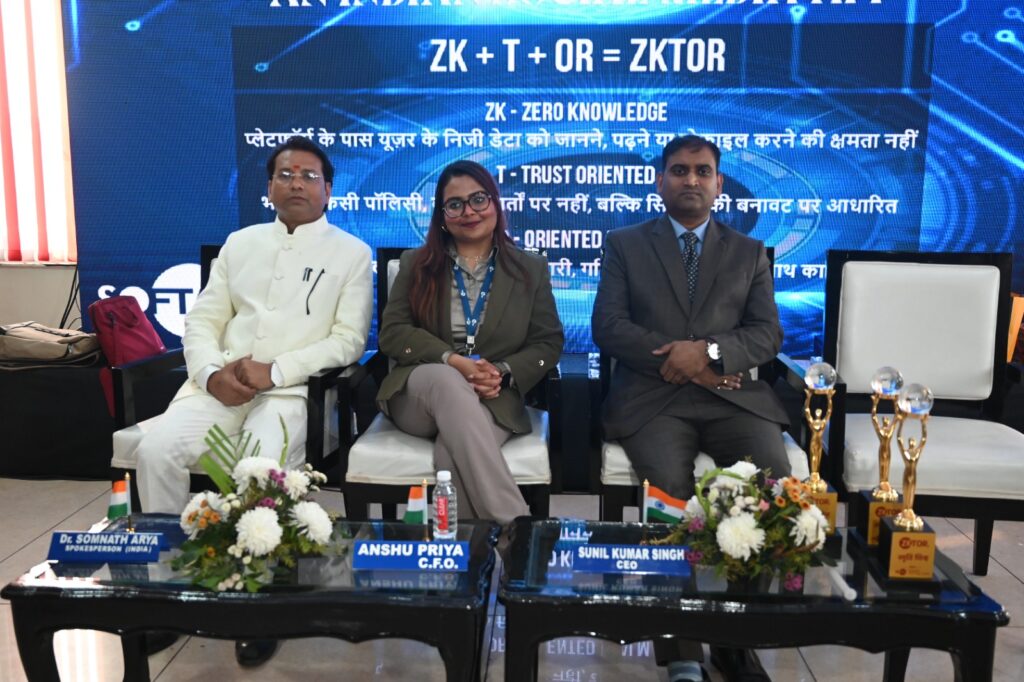
It is within this evolving regional context that ZKTOR has entered beta testing in Sri Lanka. Developed by Softa Technologies Limited, the platform approaches social media as foundational infrastructure rather than a growth driven product. Its architecture is built on privacy by design and zero knowledge principles, structurally preventing behavioural profiling, centralised surveillance, and data commodification.
ZKTOR’s system embeds multi layer encryption across all communications, applies geographically bounded data handling, and restricts media extraction at the architectural level. These measures address not only individual safety concerns but also systemic risks associated with cross border data dependence and external influence.
The platform’s design philosophy reflects the background of its chief architect, Sunil Kumar Singh, whose more than two decades of work in Finland exposed him to Nordic governance models prioritising restraint, transparency, and institutional trust. ZKTOR translates those principles into a South Asian environment defined by demographic scale, linguistic diversity, and uneven digital awareness.
Equally significant is the platform’s financial independence. Developed without venture capital investment and without government grants, ZKTOR operates debt free. This structure limits external leverage over governance decisions, a rarity in an industry where financial pressure often shapes data practices and platform priorities.
ZKTOR’s Sri Lanka beta follows mass testing already underway in India and Nepal, with Bangladesh scheduled for upcoming phases. Its regional rollout strategy suggests a deliberate focus on South Asia as both testing ground and primary constituency.For Sri Lanka, the relevance lies not in immediate competition with dominant platforms, but in the precedent such initiatives establish. As nations reassess digital dependence in an AI driven era, platforms designed within the region offer an alternative lens on control, accountability, and autonomy. ZKTOR’s beta signals a quiet but consequential shift: digital spaces need not be inherited. They can be designed, governed, and owned with intention.